The Linen Closet · Bedding Guide
A Guide to Coyuchi Sheets: Fiber, Feel, and Everyday Care
The appeal of a well-made bed is partly visual, but the real pleasure begins at the surface: the way a sheet feels against the skin, how it responds to warmth, and whether it becomes more comfortable with use. When considering Coyuchi sheets, look beyond color and styling. Fiber, weave, finish, fit, and care all help determine whether a set suits your sleep preferences and your everyday routine.
Published November 1, 2026
Start with the fiber, not the photograph
Product photography can make different sheets look remarkably similar. A crisp white percale set, a softly rumpled linen set, and a smooth sateen set may all appear serene in a carefully styled bedroom. Yet the experience of sleeping in them can be quite different. The fiber is a useful place to begin because it establishes the material’s basic character: its texture, weight, breathability, and response to washing.
Coyuchi is associated with bedding and home textiles made from natural fibers, including cotton and linen. That broad description is a starting point, not a guarantee that every sheet in a collection feels or performs the same way. Fiber content, yarn, weave, finishing, and fabric weight can vary by product. For a specific set, read the current product details and care label rather than relying on the name of a collection or a general impression of the brand.
Natural fiber does not, by itself, tell you whether a sheet will feel cool, crisp, smooth, or soft. Those qualities emerge from the whole construction. A lightweight fabric with a crisp weave may feel airy and freshly laundered; a more substantial fabric with a soft finish may feel relaxed and enveloping. The right choice depends less on a universal ranking of materials than on the conditions in which you sleep and the tactile qualities you enjoy.
Cotton and linen: two distinct ways to make a bed
Cotton is a familiar bedding fiber, valued for its versatility and the range of finishes and weaves it can take. Depending on construction, cotton sheets may feel cool and crisp, smooth and fluid, or softly brushed. The label’s fiber information is only one part of the story; the weave and finish help explain why two cotton sets can have such different personalities.
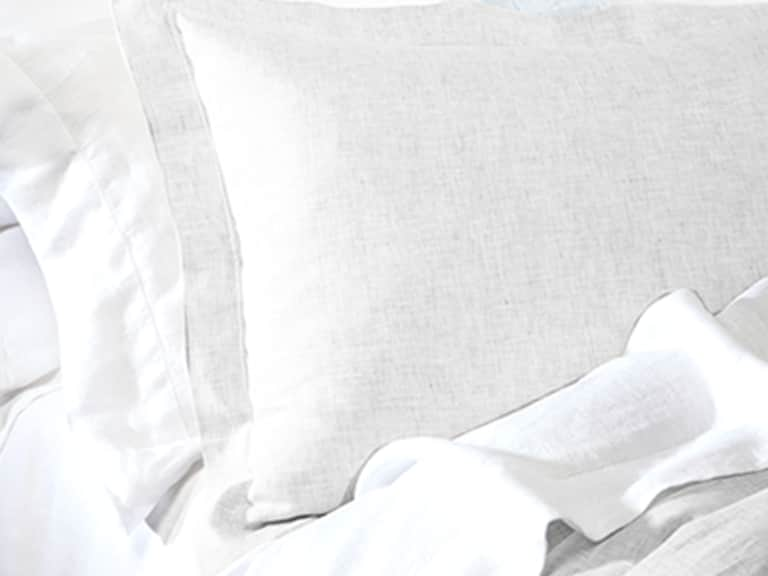
Linen is made from flax fibers and is known for its textured surface and naturally relaxed appearance. Linen sheets are often chosen for their airy hand and easy, lived-in character. The fabric can feel more textured than many cotton sheets when new, and it may soften as it is used and laundered. Its characteristic creases are part of its look, rather than a sign that a bed has been neglected. If you prefer a perfectly smooth surface, linen’s casual finish may not be your ideal match; if you like a room that feels quietly unbuttoned, it can be an appealing alternative.
Neither fiber is automatically the better choice for every sleeper. Cotton offers a broad spectrum of textures, while linen’s distinctive surface and drape are part of its appeal. A person who sleeps warm may prioritize an airy weave and a lighter hand; someone who enjoys a smooth, close-to-the-skin feel may gravitate toward a different construction. The most useful question is not simply “Which fiber is best?” but “Which combination of fiber and weave feels right to me?”
Be attentive to exact material descriptions. A set may be made from one fiber, a blend, or different materials across the sheet and trim. Look for the stated fiber percentages and check whether the listing distinguishes the fitted sheet, flat sheet, and pillowcases. Clear specifications make it easier to compare options fairly.
Weave shapes the hand
Weave is the structure formed as yarns cross one another. It influences how a sheet looks and feels, how it drapes, and how it behaves in regular use. Two fabrics made from the same fiber can feel markedly different because their yarns are arranged differently or finished in different ways.
Percale is commonly associated with a matte appearance and a crisp, breathable feel. Its straightforward, balanced structure gives it a fresh quality that many people enjoy, particularly in warmer months or in bedrooms where a light, clean finish is the goal. Percale may feel firmer at first and can soften with laundering, although results depend on the specific fabric and its finish.
Sateen is woven to create a smoother surface with a subtle sheen. It often feels more fluid and supple against the skin than percale. That smoothness can be appealing to anyone who likes a polished bed, though the fabric may feel warmer or heavier to some sleepers, depending on its weight and construction. A glossy finish is not a measure of quality on its own; it is simply one aspect of appearance and hand.
Linen’s texture is shaped by the flax yarn and the way it is woven and finished. Its irregularities may be visible and tactile, lending the fabric depth rather than a uniformly smooth surface. A washed finish can contribute to a more relaxed feel from the outset. When comparing linen options, consider not only softness but also how much texture you enjoy and how comfortable you are with natural creasing.
Thread count is often given considerable attention, but it cannot describe every element of a sheet. It does not, by itself, explain the fiber, yarn quality, weave, finishing, or feel. Treat it as one specification among many, not as a shortcut to comfort. Reading the complete material description and understanding the weave will usually offer a more useful picture.
A closer look at feel and sleep preferences
Comfort is personal, and it can change with the season, the room, and even the way a bed is made. Start by noticing what you already like. Do you reach for a cool, crisp pillowcase? Prefer a smooth sheet that glides under a light cover? Love the rumpled texture of linen? These everyday preferences offer better guidance than a trend or an idealized bedroom photograph.
For a crisp sensation, look for a fabric described with terms such as percale or matte, and check its weight and care guidance. For a smoother hand, a sateen weave may be worth considering. For a textured, relaxed bed, linen is a natural candidate. Descriptive words such as “soft,” “cool,” or “light” can be helpful, but they are subjective; compare them with practical details such as fiber, weave, and construction.
Think about your bedroom climate, too. A sheet is only one part of the sleep environment, alongside the mattress, duvet, pajamas, and room temperature. A breathable fabric may help the bed feel more comfortable, but it cannot guarantee a particular temperature or resolve every sleep concern. If you tend to feel warm, consider a lighter-feeling weave and avoid assuming that a heavier sheet will be more luxurious. If you tend to feel cool, a smoother or more substantial fabric may appeal, but layering can often provide more flexibility than choosing the heaviest sheet available.
There is also the question of sensory preference. Some sleepers enjoy the pronounced texture of linen; others favor the more uniform surface of cotton. If you have sensitivities to texture, descriptions and photographs may not be enough to predict how a fabric will feel. When possible, feel a swatch in person or review the seller’s return terms before buying. A thoughtful choice begins with the sensation you want to experience night after night, not simply with the story attached to the fabric.
Fit is part of comfort
A beautiful sheet that slips off the mattress is unlikely to become a favorite. Before choosing a set, confirm the mattress dimensions and the pocket depth of the fitted sheet. Account for a mattress topper or protector, since either can add height and alter the fit. Check whether the listing states measurements for each component, and make sure you are comparing the correct bed size.
Fit also involves details beyond the fitted sheet. A flat sheet should be long and wide enough for the tuck you prefer. Pillowcases should suit the dimensions of your pillows, especially if you use oversized or European-style pillows. If a set includes only certain pieces, take note of what is and is not included; the word “set” can describe different combinations from one listing to another.
Closures, hems, and finishing details may influence the look and handling of bedding, but comfort should remain the priority. A neat hem contributes polish; a well-proportioned fitted sheet supports a smoother bed. Pay attention to practical construction as well as the finish that first catches your eye.
Reading the care label with confidence
Care instructions are not an afterthought. They describe the routine a textile is intended to tolerate and can help preserve its feel and fit over time. Bedding is washed regularly, so a manageable care routine matters as much as a beautiful first impression. Always follow the instructions supplied with the specific item; guidance can vary between fabrics and finishes, even within one brand’s range.
Before washing, sort sheets by color and fabric type. Keep light and dark textiles separate, and avoid washing sheets alongside items with rough fasteners, heavy lint, or abrasive surfaces. Zippers and hooks can catch delicate cloth. Giving bedding room to move helps detergent and water circulate more effectively, while an overloaded machine can contribute to uneven washing and wrinkling.
Use the water temperature and cycle specified on the care label. A gentle cycle and a mild detergent may be appropriate for many delicate or natural-fiber textiles, but the label should decide. More detergent does not necessarily mean cleaner sheets; residue can affect the hand of fabric. Use a suitable amount for the load and the detergent, and avoid adding bleach or other treatments unless the manufacturer’s instructions permit them.
When laundering a new set for the first time, check its care instructions before removing packaging or washing. Some fabrics benefit from an initial wash, while other directions may specify particular handling. Avoid assuming that every sheet responds identically simply because it is made from cotton or linen. The individual product label is the most reliable guide.
Drying: gentle habits, lasting usefulness
Drying is where an easy-care routine can make a noticeable difference. High heat and over-drying may place unnecessary stress on fibers and can make wrinkles more pronounced. If the label allows machine drying, choose the recommended setting and remove the sheets promptly once they are dry. A brief shake before folding or remaking the bed can help loosen creases.
Line drying is an option when the care instructions permit it and space allows. Air drying can reduce reliance on a dryer, though outdoor conditions and direct sun may affect color over time. Follow the product guidance, particularly for dyed or finished fabrics. If you prefer a smoother appearance, ironing may be suitable for some sheets; check the label for temperature and whether steam is appropriate. Linen is often worn with its natural creases, so ironing is a matter of preference rather than a universal requirement.
A balanced routine is usually more useful than an elaborate one: wash at the recommended temperature, use a suitable cycle, dry without excessive heat, and store bedding only once it is fully dry. If sheets emerge with persistent detergent residue, strong odors, or unusual changes in texture, review the amount of detergent and the machine’s loading, then consult the manufacturer’s instructions rather than applying a harsh treatment automatically.
Keeping sheets fresh between washes
Regular washing is part of ordinary bedding care, but there is no single interval that suits every household. Climate, personal preference, pets, skin sensitivities, and how often the bed is used all affect the routine. A consistent schedule helps keep the bed feeling fresh; the precise frequency is a practical decision rather than a rule that must be identical for everyone.
Once clean and dry, sheets benefit from a dry, well-ventilated storage space. Fold them neatly, avoid sealing damp textiles in airtight containers, and keep them away from direct sunlight if color preservation is a concern. A breathable shelf or linen cupboard helps maintain a simple rotation: place freshly laundered pieces behind the set already in use so each set gets an even turn.
Careful storage is especially useful when sheets are put away for a season. Make sure they are fully dry before folding, and choose a clean, dry location. If a fabric develops an unfamiliar odor or visible marks in storage, identify the cause before treating it. Aggressive spot treatments can affect dyes or finishes, so test a suitable approach discreetly or seek the maker’s guidance.
A practical checklist before you choose
It is easy to be drawn to a color or a beautifully styled bed. A short checklist keeps the decision grounded in how the sheets will actually be used:
- Confirm fiber content. Check the stated material and percentages for the pieces in the set.
- Identify the weave. Percale, sateen, and linen constructions offer different textures and drape.
- Consider your preferred hand. Decide whether you like crisp, smooth, soft, or visibly textured fabric.
- Check the dimensions. Match the fitted sheet’s pocket depth to your mattress, including any topper.
- Review what is included. Verify whether pillowcases and a flat sheet are part of the set.
- Read the care instructions. Make sure the laundering routine fits your household.
- Look at the finish and color information. Understand how the product is described and any special care it may require.
- Check current purchase terms. Availability, specifications, and return policies can change, so consult the retailer’s current listing.
This approach is particularly useful when comparing Coyuchi sheets with other bedding. Rather than treating a brand name as a substitute for the details, compare like with like: fiber against fiber, weave against weave, and care requirements against your routine. That makes it easier to determine whether a particular set offers the kind of comfort you value.
Building a bed with a considered point of view
Sheets set the mood of a bedroom as much as they establish its everyday comfort. A matte cotton surface can feel spare and composed; linen brings an easy, textural quality; a smoother weave lends a more polished note. Color contributes, but the best foundation is one that works with the rest of the bed rather than competing with it. Neutral bedding can be expressive through texture, while a muted stripe or deeper tone can introduce character without overwhelming a room.
Layer with intention. A breathable sheet, a cover suited to the season, and pillows in complementary textures can make a bed feel complete without unnecessary complexity. If you enjoy linen’s relaxed appearance, pairing it with a smoother cotton accent can create contrast. If you prefer a crisp, orderly finish, keep the palette restrained and focus on fit, proportion, and clean edges.
There is no obligation to make a bed look immaculate to make it inviting. Materials that soften with use and carry the marks of ordinary living can create a sense of ease. Choose details that support your routine: a fabric you enjoy touching, a size that stays in place, and a care label you can realistically follow. The result is not a showroom bed, but a personal one.
The enduring appeal of natural-fiber bedding
Natural fibers attract interest for more than their appearance. They have distinct tactile qualities and a long place in everyday textile traditions, but their practical performance still depends on how they are grown, processed, spun, woven, finished, and cared for. A label such as “organic” or a statement about origin can add useful context, but it does not replace the basic information about fiber, construction, and care.
When sustainability is part of your decision, look for specific, verifiable information rather than relying on broad language alone. Certifications, where stated, apply according to their own standards and scope. Check what a certification covers and whether it relates to the fiber, processing, or finished product. Durability and care also matter: a textile used and maintained over time may be more meaningful to your household than one chosen solely for a claim or trend.
With bedding, longevity is often a combination of sound construction and considerate handling. Gentle laundering, suitable drying, and correct storage cannot prevent every sign of use, nor should they be expected to. They can, however, help maintain a sheet’s appearance and usefulness while allowing the material to develop its character naturally.
A more personal measure of luxury
Luxury in bedding is not simply a number on a label or a particular finish. It may mean the clean crispness of a freshly washed percale sheet, the smoothness of cotton sateen, or the imperfect beauty of linen after years of use. It may be a fitted sheet that stays in place, a pillowcase that feels pleasant against the skin, or a washing routine that asks very little of you.
For anyone considering Coyuchi sheets, the most assured choice begins with the actual product specifications. Compare the fiber and weave, take your own sleep preferences seriously, confirm the fit, and read the care instructions before deciding. Then let the bedding become part of daily life. Sheets are not meant to remain untouched as a decorative gesture; they are meant to be slept in, washed, folded, and enjoyed.
That is the quiet standard worth returning to: fabric that feels right, construction that suits the bed, and care that fits the household. When those elements align, the effect is subtle but unmistakable—a bed that feels considered without feeling precious, and comfort that holds its appeal long after the first night.